About three months ago Moran went off on a maternity leave. Today was the official first step on returning to academic work. To make the transition easier she was accompanied by her family. We got a chance to meet the family and the joy young ones bring.
Tuesday, June 21, 2011
Saturday, June 11, 2011
Another weekend diving
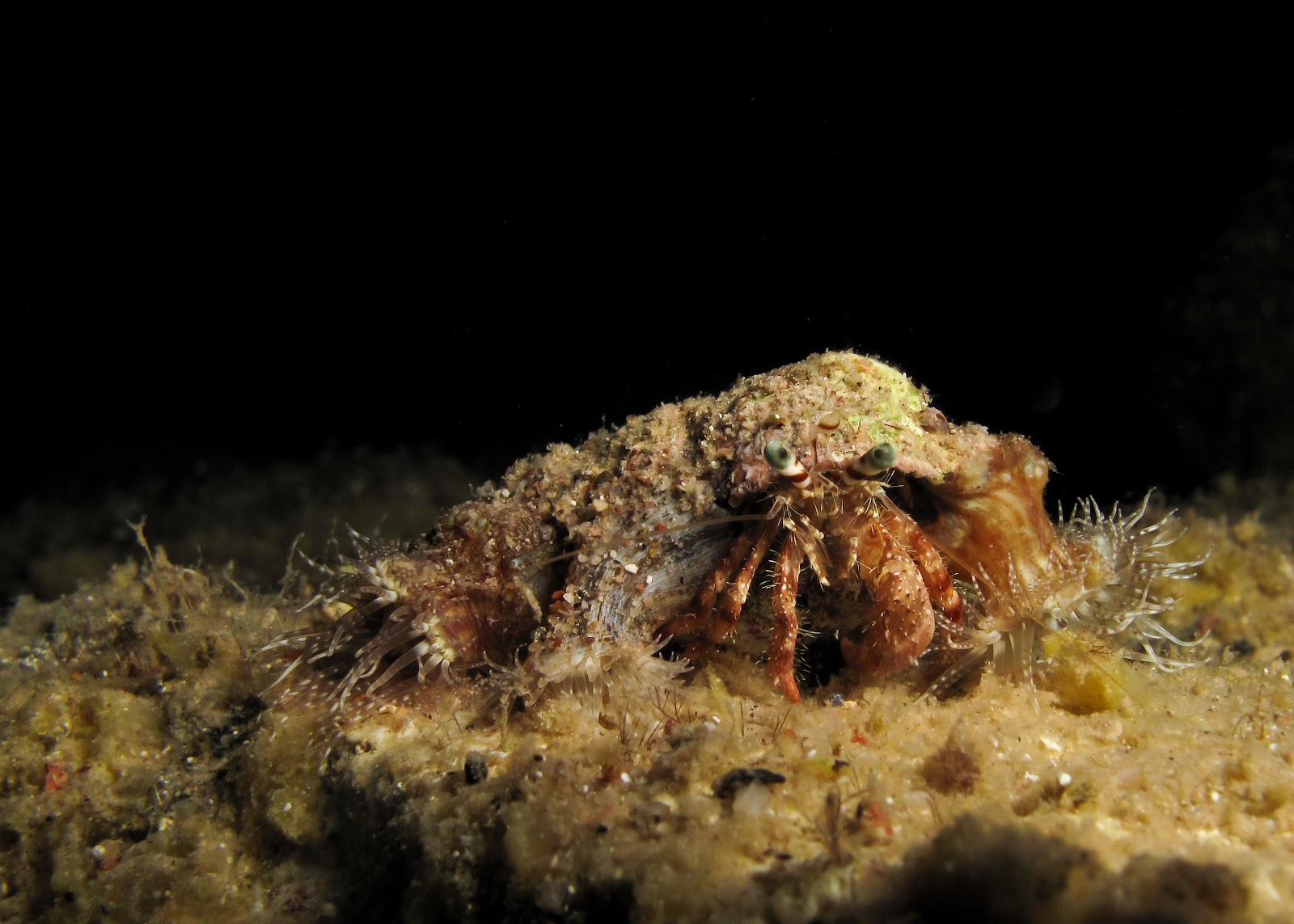
Two weekend days to enjoy diving in Eilat. Many good sights and nice company of local people and fellow divers.
Tuesday, June 7, 2011
Patterns and Mechanisms of Ancestral Histone Protein Inheritance in Budding Yeast
Hot from the (virtual) press! A paper that we have been working on for almost a year appeared today in PLoS Biology. This is three way collaboration between Fred van Leeuwen's group at the Netherlands Cancer Institute, Ollie Rando's group at UMass Medical School and our group. The work on our end was mostly Assaf's who is a co-first author.
The interesting aspect of this paper is that using a trick developed in Fred's group, they can switch a "tag" on a histone H3 protein. This means that up to a certain point all H3 proteins are tagged by one tag, and after the switch they are all tagged with a different tag. Using this switch we can find out where these "old" histones are several generations after the switch. This gives us insight on how the cells perserve old histones during several cycles of replication.
To quote ourselves:
To our surprise, ancestral histones accumulate near the 5′ end of long, relatively inactive genes. Using a mathematical model, we show that our results can be explained by the combined effects of histone replacement, histone movement along genes from 3′ towards 5′ ends, and histone spreading during replication. Our results show that old histones do move but stay relatively close to their original location (within around 400 base-pairs), which places important constraints on how chromatin could potentially carry epigenetic information. Our findings also suggest that accumulation of the ancestral histones that are inherited can influence histone modification patterns.
To get to these conclusions Assaf implemented a mathematical model that takes into account the processes that affect nucleosome positions, and then showed that this model can provide a good fit to the data if we consider turnover, passback of nucleosomes (from 3' to 5'), and localized dispersion during replication.
Monday, June 6, 2011
Freiburg/Heidelberg
Just returned from a week long trip to Germany. It started by a visit to Max Planck Institute for Immunobiology and Epigenetics at Freiburg to attend a one day workshop on Chromatin. After the talks the hosts took us to a nice resto-bar where there was a long and lively scientific discussion over beer, schnitzel and white asparagus.
The next morning, it was raining, but I went on a brief walk in Frieburg's old town.
Afterwards, I continued to Heidelberg to attend the EMBL Chromatin and Epigenetics meeting. This was a four and half day meeting with a lot of interesting talks and discussions with people.
The meeting was held in an impressive new training center at EMBL's campus on the hills above Heidelberg. It is built as a double helix, and so there are no floors, but rather helical ramp ways all around.
I also took a half day off to go bike riding in the area and had few hours to visit the famous Schloss.
Thursday, June 2, 2011
Another graduation and a new lab website
Last week Noa officially graduated. She turned in her dissertation on "Transcription Regulation Models and Their Application to Human Disease Research". She is moving on to the Weizmann Institute to work with Yaqub Hanna.
We will have a proper sendoff for Noa soon, although the scheduling of the event seem to be a serious challenge.
Sunday, May 22, 2011
New furniture
The remaining open item in our lab renovation was furniture for the common kitchen/meeting room and for the offices. Since we were not sure about the amount of surplus budget, we left these for later stages of the renovation.
Once the major experimental areas were finished, we started on this mini-project. As usual, the planning stage took longer than expected, and then we had to get quotes, issue a purchase order, and wait for the carpenter to make the furniture.
Last week this process ended, and Benny our carpenter showed up to install the furniture. As part of the renovation of the kitchen he also had help in installing new kitchen top and sink.
The end result was a brand new room with much nicer table to sit around, areas for storage, and kitchen top for the coffee machine and water dispenser. Below the counter there is a place for several refrigerators so that each group can keep its own stuff separately.
On his next visit Benny installed the office (when I was away for the retreat). The new office design looks much better and provides area to sit and work.
Thursday, May 19, 2011
CSLS Retreat
I am one of the heads of the Computer Science and Computational Biology dual-major program at the Hebrew University. The unofficial name more often used is Computer Science - Life Science (CSLS). As part of our activities we hold a yearly retreat with all the undergraduate students in the program, teachers, and some of the program graduates.
During the retreat the third year students present their senior year project, we have some social activities, discuss the program and issues raised by students at different stages, and have a guest lecturer.
Our guest lecturer this year was Roy Kishony from Harvard Medical Center who talked about bacteria, anti-biotics, and forces that shape they evolution of anti-bacterial resistance.
The location of the retreat is on the beach in Hof Dor (also known as Tantura, see a wikipeida article on the complex history of the place), south of Haifa, which hosts a very beautiful settings for activities. The location is northen border of the sandy beaches of southern Israel, which are formed by sand from the Nile. From here to the north there are hills of sandstone that form ragged beaches. The location was the southern-most Phoenician city of Dor, which served as a port for various sea-routes of the Phoenician traders. They also had an active industry for collecting sea shells from which the "Royal Purple" color was manufactured (a very rare and expensive dye in the ancient world).
Today, the natural lagons are a harbour for fishing boats and a public beach.
We finished the retreat with a short trip in Ramat Hanadiv, a park established by the Baron Edmund de Rothschild Foundation in his memory at the southern part of the Carmel mountain. This includes very nice gardens and a large area for nature conservation
Subscribe to:
Posts (Atom)